
In an age of digital fashion and fast production, India’s hand block printing traditions remain timeless symbols of artistry, culture, and sustainability. Among the most iconic are the techniques of Bagru, Dabu, and Ajrakh—each deeply embedded in the soil and spirit of Indian textile heritage.
Let’s take you on a journey into the origins, evolution, and cultural richness of these intricate arts.
Bagru Printing: Earthy Elegance from Rajasthan
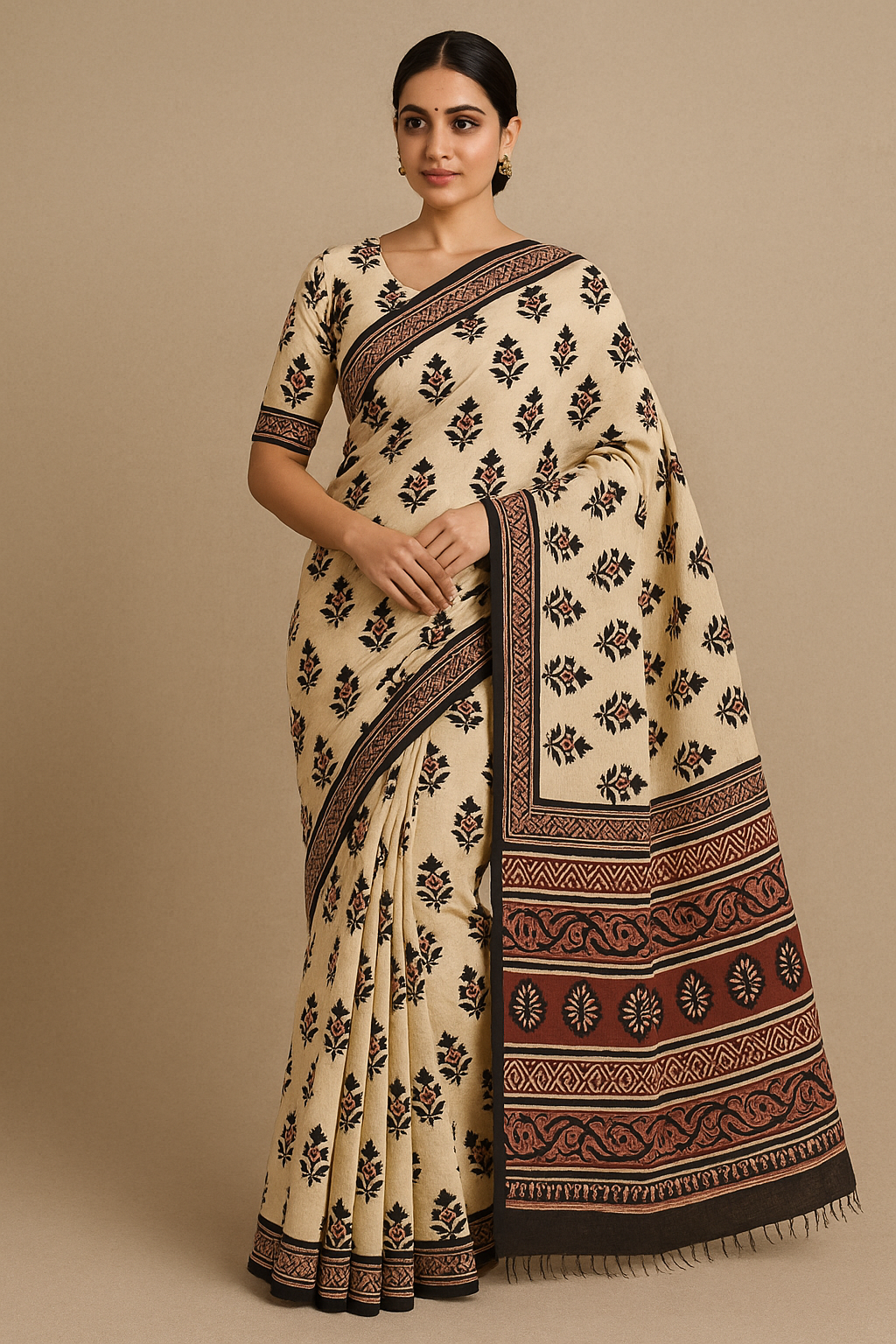
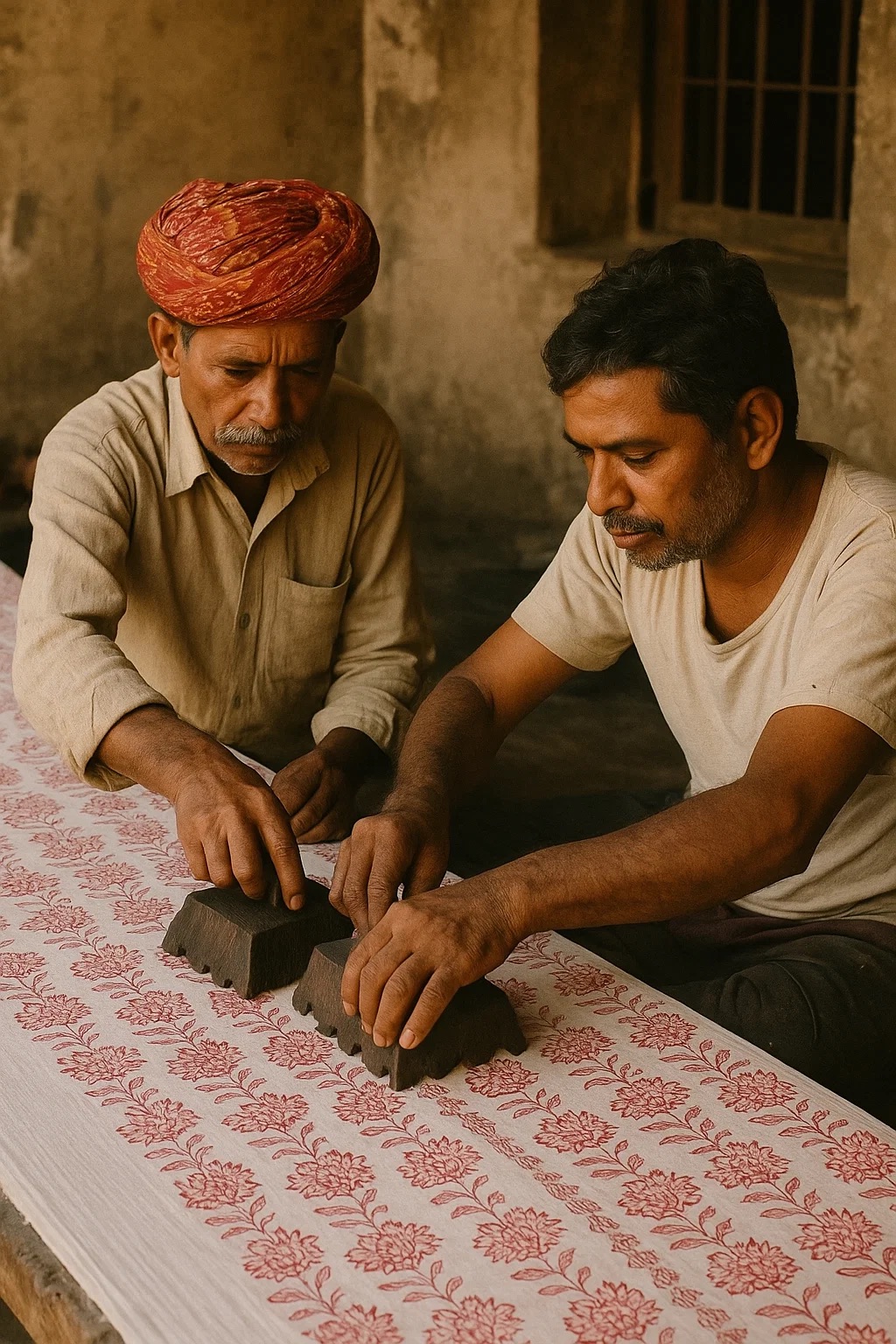
Bagru printing originated over 300 years ago in the town of Bagru, near Jaipur, Rajasthan. Practiced by the Chhipa community, this technique uses natural dyes and wooden hand-carved blocks to create bold floral and geometric motifs.
Colors: Typically black, red, maroon, and indigo on off-white or cream bases.
Technique: The fabric is soaked in fuller's earth and turmeric, then printed using blocks soaked in natural dyes.
Cultural Note: Bagru prints are often worn during festive and religious rituals, showcasing Rajasthan’s rustic charm.
Dabu Printing: Mud-Resist Magic
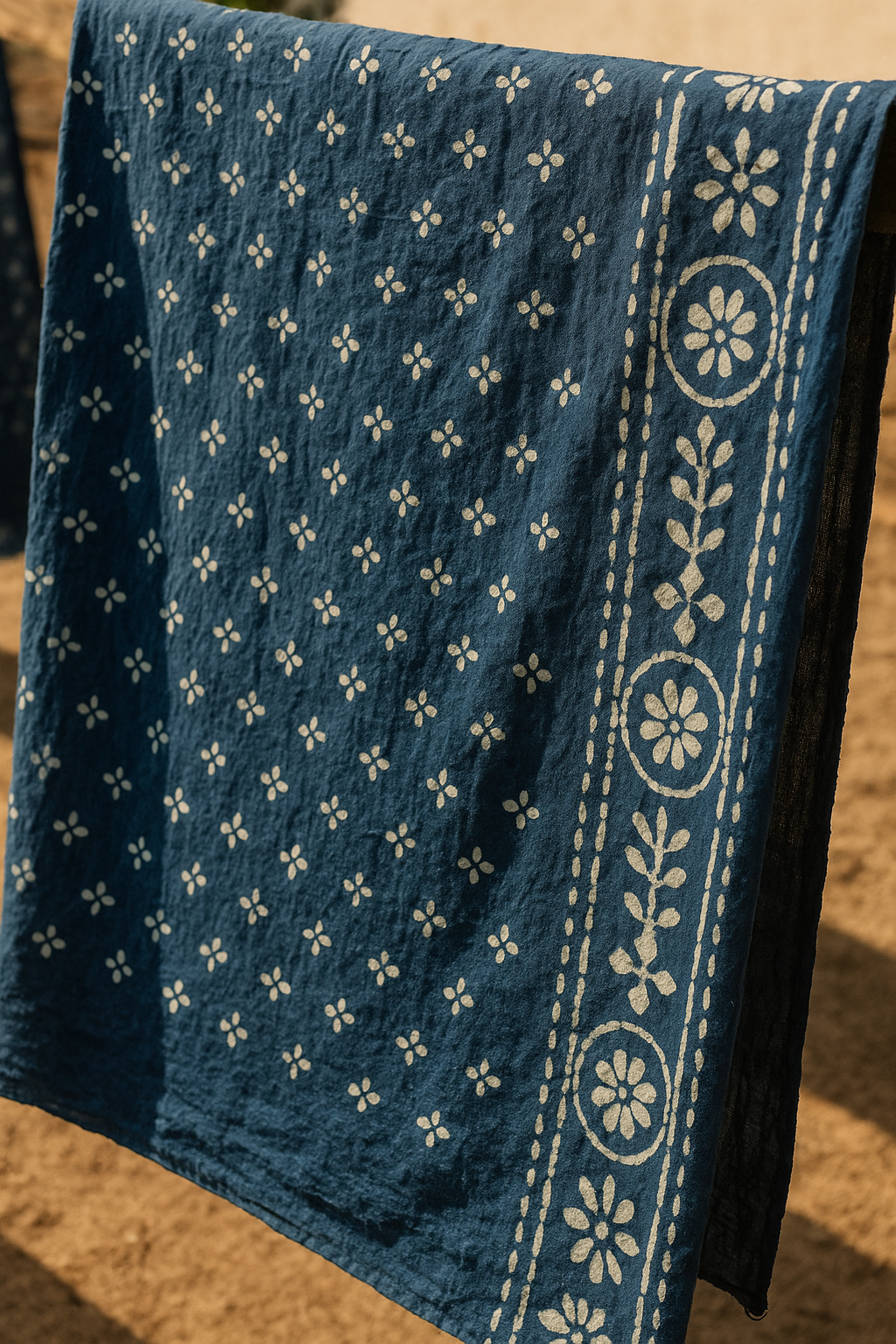
Dabu printing is an ancient resist dyeing technique, also rooted in Rajasthan. It dates back over 500 years, passed down by artisan families in Akola and Bagru.
Process: A paste made from mud, gum, lime, and wheat husk is applied to the fabric. The cloth is dyed, and the paste resists the color, leaving behind beautiful patterns after washing.
Appearance: Intricate, uneven, and uniquely rustic—each piece is naturally imperfect.
Cultural Relevance: Dabu prints are considered symbols of earth, simplicity, and handmade integrity.
Ajrakh Printing: The Soul of Sindh and Kutch
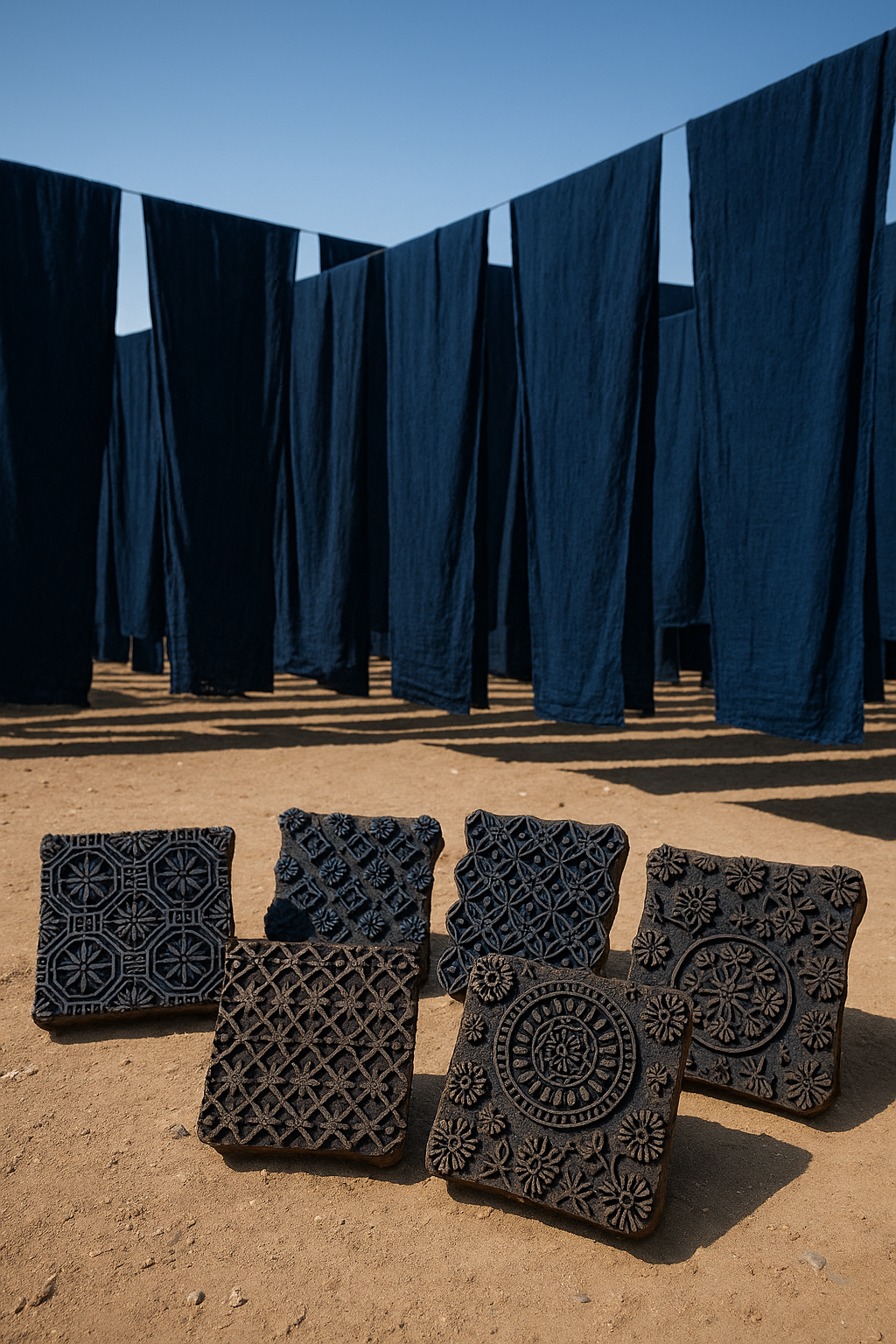
Ajrakh is one of the oldest textile traditions in the world, dating back to the Indus Valley Civilization (over 3,500 years ago). Practiced today in Kutch (Gujarat) and Sindh (Pakistan), it represents mathematical precision and cosmic symmetry.
Technique: A long, complex process involving double-sided block printing with natural dyes, mainly indigo and madder.
Symbols: Motifs resemble stars, moons, and natural balance—connecting the textile to spiritual and scientific harmony.
Legacy: Ajrakh is not just fabric—it’s heritage worn with pride, especially in communities like the Muslim Khatris of Kutch.
Why These Prints Matter Today
In a world dominated by synthetic textiles, these ancient arts are reminders of our roots, sustainability, and handcrafted luxury. They celebrate slow fashion and local artisans who carry forward a generational legacy of eco-conscious creation.
At Satika.live, we’re proud to curate sarees that preserve these age-old printing traditions—blending heritage with contemporary elegance.
Discover the Soul of Indian Prints – Only at Satika.live