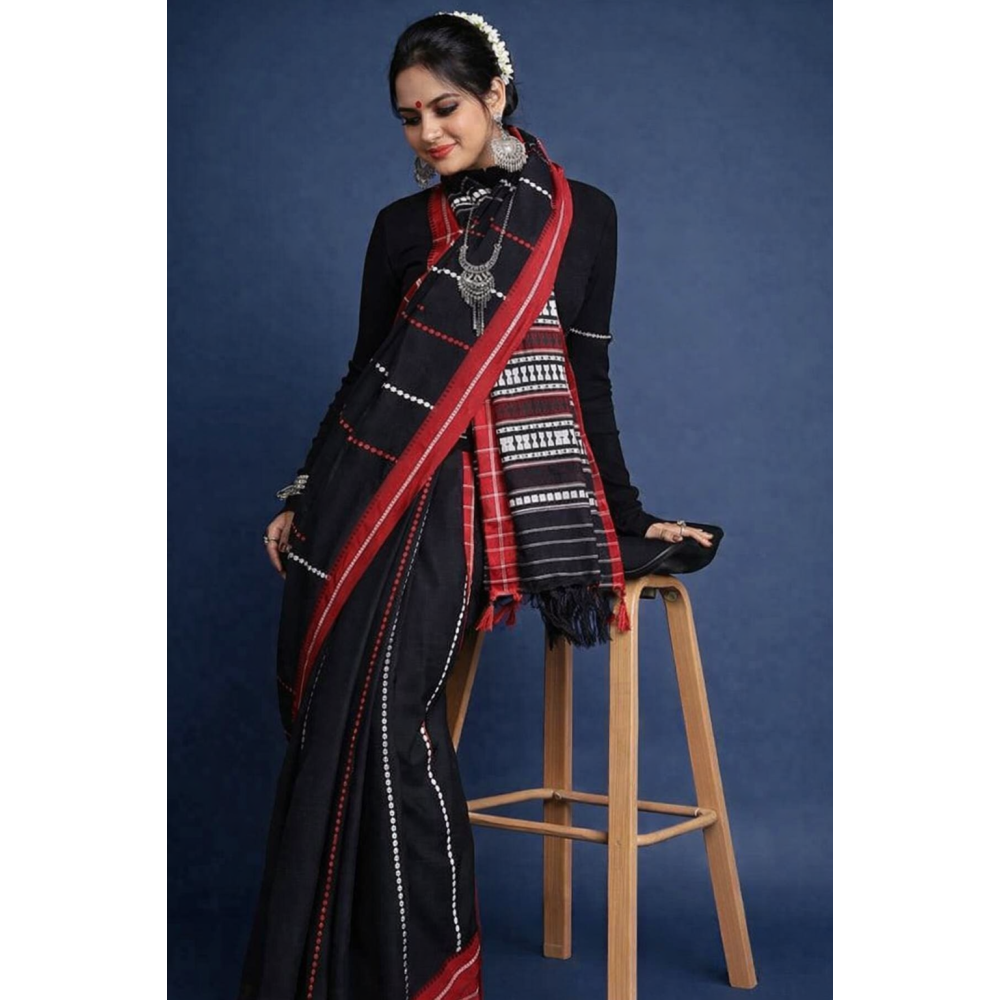

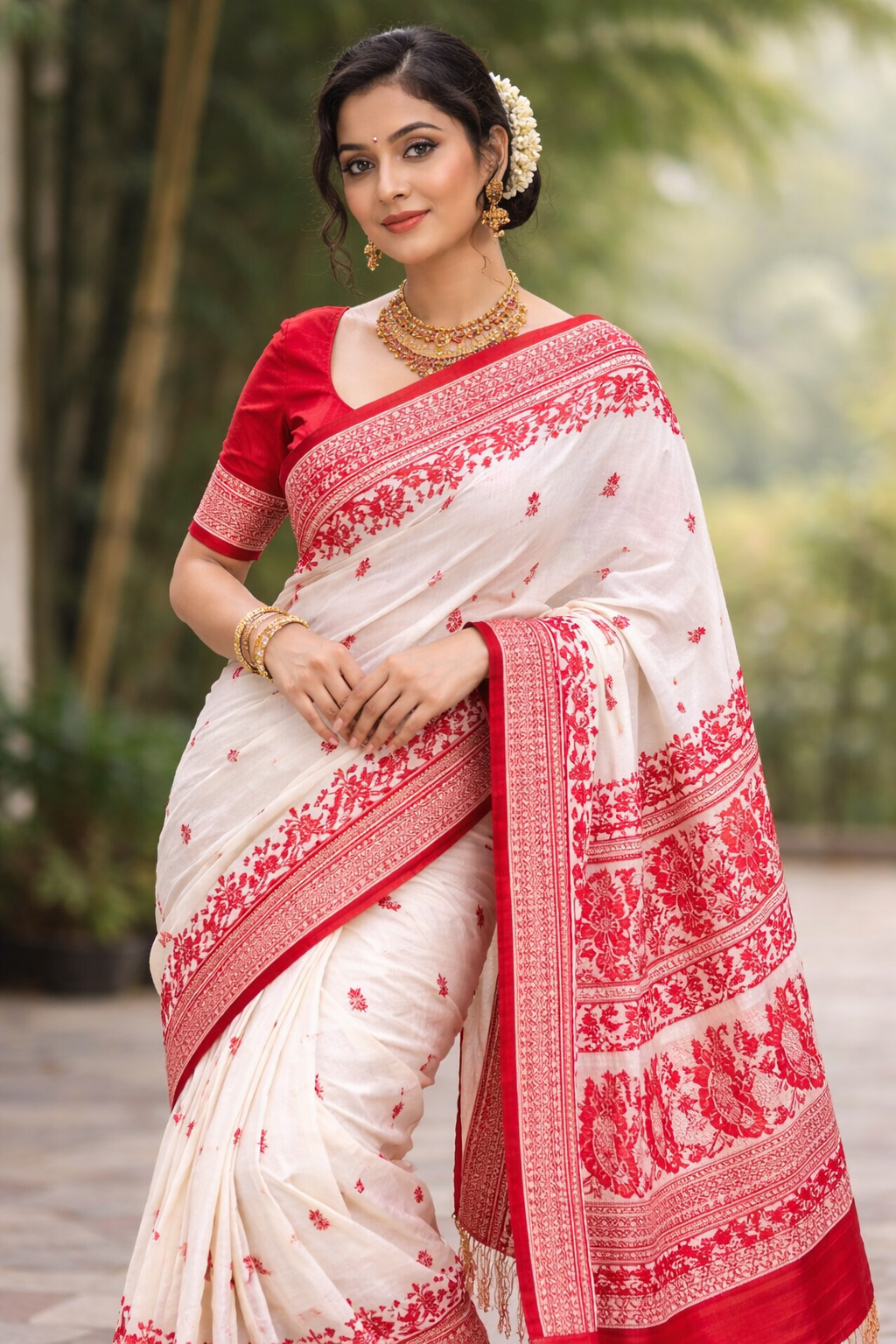
Assamese silk is not merely woven—it is cultivated by nature, nurtured by tradition, and perfected by generations of skilled hands. Deeply rooted in the cultural and spiritual life of Assam, these silks reflect a rare harmony between heritage, sustainability, and understated luxury. Every thread carries centuries of wisdom, ritual, and reverence for craft.
The Timeless Origins of Assamese Silk
The story of Assamese silk traces back to ancient India, referenced in early scriptures and admired by travelers who described its unmatched luster and resilience. Blessed with a fertile landscape and a favorable climate, Assam became one of the few regions in the world where silk production evolved as a self-sustaining ecosystem—from silkworm rearing to hand weaving—entirely within its land.
The Three Pillars of Assamese Silk
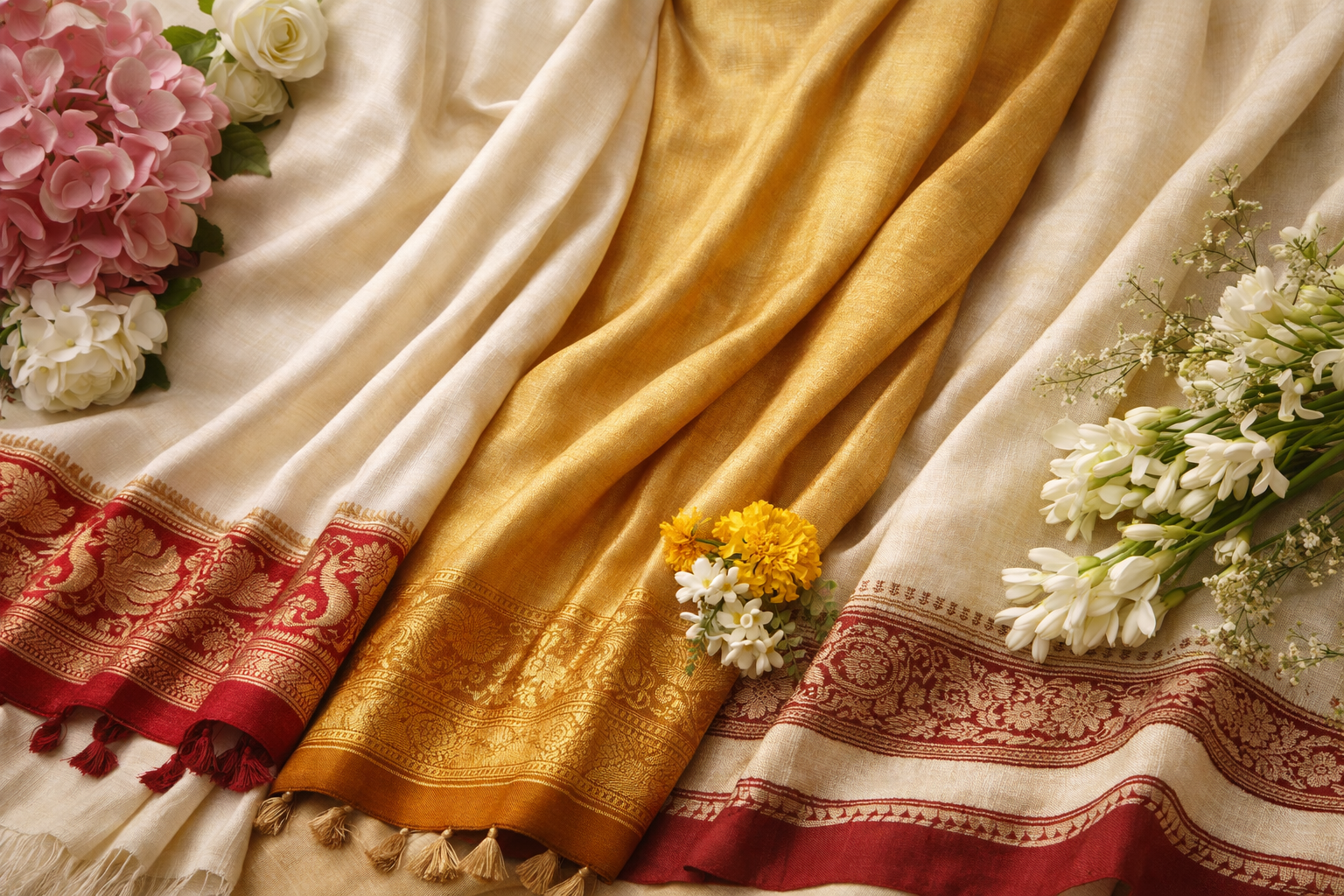
Muga Silk (Short name: Muga)
Exclusive to Assam, Muga silk is renowned for its natural golden glow—an elegance that deepens with time. Woven from the rare Antheraea assamensis silkworm, Muga is considered sacred and auspicious, traditionally reserved for weddings, ceremonies, and heirloom creations. Its durability and radiance make it one of the world’s most precious silks.
Eri Silk (Short name: Eri)
Soft, breathable, and ethically produced, Eri silk is often called “Ahimsa Silk” for its non-violent process. Historically worn by royalty and monks alike, Eri embodies Assam’s philosophy of conscious luxury—where comfort, sustainability, and craftsmanship coexist effortlessly.
Pat Silk (Short name: Pat)
Graceful and luminous, Pat silk is cherished for its smooth texture and pristine ivory sheen. Commonly used in Mekhela Chadors, it symbolizes purity and celebration, forming an integral part of Assamese festivals and daily elegance.
Ancient Craftsmanship, Contemporary Relevance
Traditionally woven on hand-operated looms, Assamese silk once relied solely on natural dyes extracted from bark, leaves, and roots. Motifs were inspired by nature and spirituality—each pattern holding symbolic meaning. Today, while refined techniques ensure durability and consistency, the soul of the craft remains unchanged. Weaving continues to be a deeply personal, home-based art practiced largely by women artisans.
A Living Heritage
Assamese silk is more than attire—it is an heirloom passed through generations, a cultural expression worn with pride, and a testament to slow, mindful luxury. In an age of mass production, these silks stand apart as rare, meaningful, and enduring.
At satika.live, we curate authentic Assamese silks that honor their origin, celebrate the artisan, and preserve a legacy meant to be worn, cherished, and remembered.