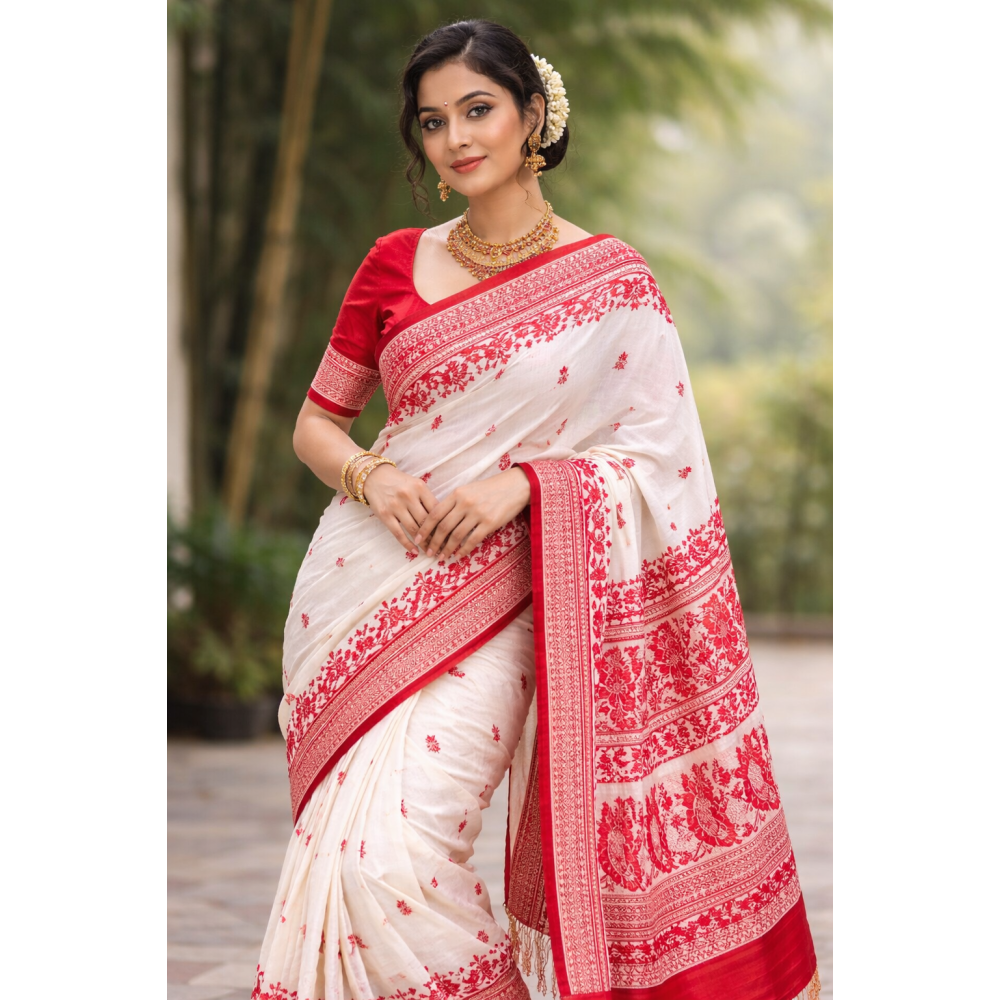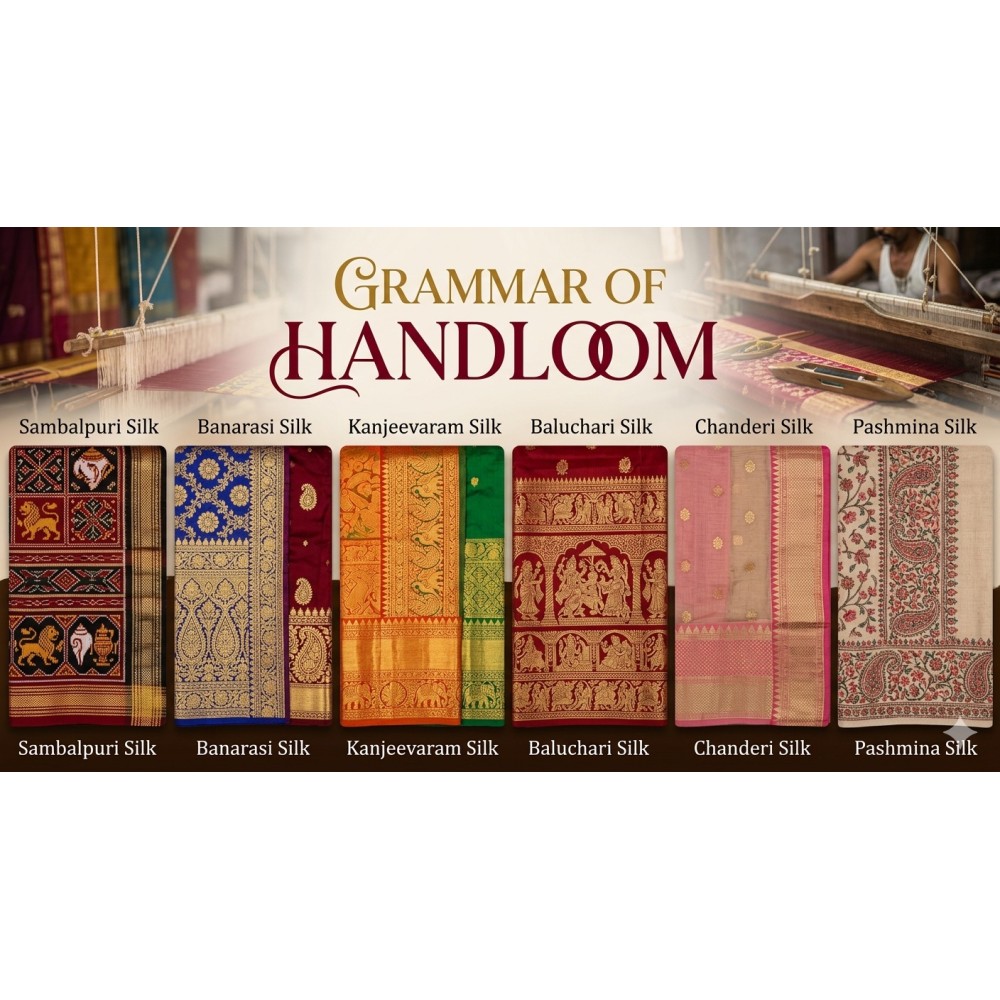

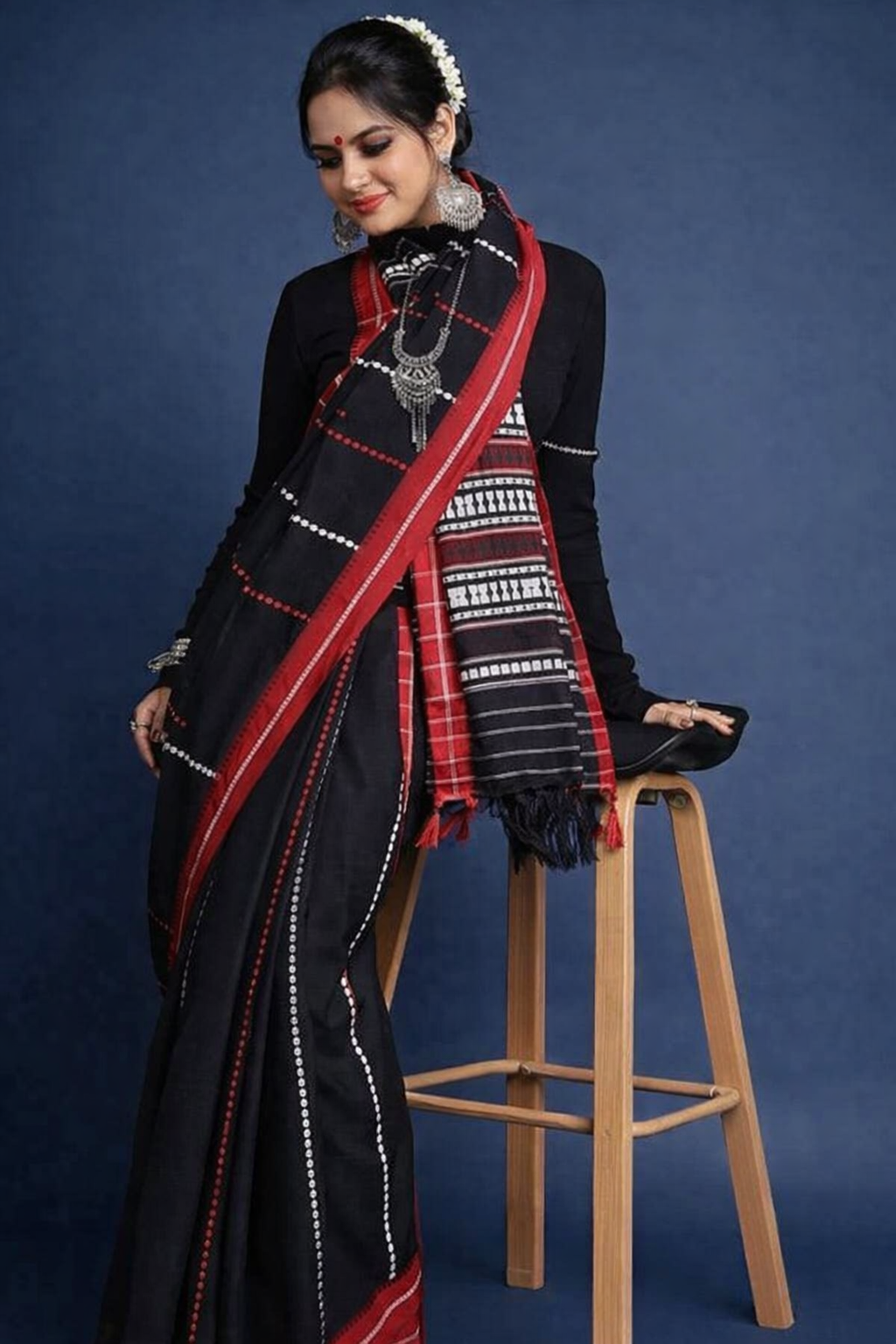
In the heart of Odisha’s Koraput district lies Kotpad, a small tribal village that has given India one of its most soulful textiles — the Kotpad handloom saree. More than just a fabric, a Kotpad saree is a living story of nature, community, and centuries-old wisdom passed gently from one generation to the next.
What makes Kotpad sarees truly extraordinary is their natural dye, extracted from the roots of the Aal (Indian Madder) tree. This age-old process creates deep, earthy hues — rich browns, warm maroons, rust reds, and soft blacks — tones that feel grounded, organic, and timeless. No chemicals, no shortcuts — just patience, knowledge, and respect for nature.
A Legacy Rooted in the Earth
The art of Kotpad weaving is practiced mainly by the Mirgan community, who have preserved this craft for over a thousand years. The yarn, traditionally handspun cotton and now sometimes silk blends, is dyed multiple times in herbal baths, then sun-dried to achieve its signature depth of color. Each motif woven into a Kotpad saree carries tribal symbolism — inspired by forests, rivers, seeds, and everyday life.
From Ancient Looms to Modern Elegance
Historically worn by tribal women during rituals and ceremonies, Kotpad sarees have gracefully found their way into contemporary wardrobes. Today, they are cherished by connoisseurs of slow fashion for their raw elegance, breathable comfort, and ethical roots. At Satika.live, every Kotpad saree is sourced with care, ensuring authenticity while celebrating the artisans behind the loom.
Why Kotpad Sarees Are Timeless
In a world moving fast, Kotpad handloom sarees invite you to pause. They represent sustainability before it became a trend, luxury without excess, and beauty shaped by human hands rather than machines. Owning a Kotpad saree is not just about style — it is about honoring heritage and wearing a piece of living history.
At Satika, we believe true elegance lies in stories worth preserving — and Kotpad is one such story, woven thread by thread.