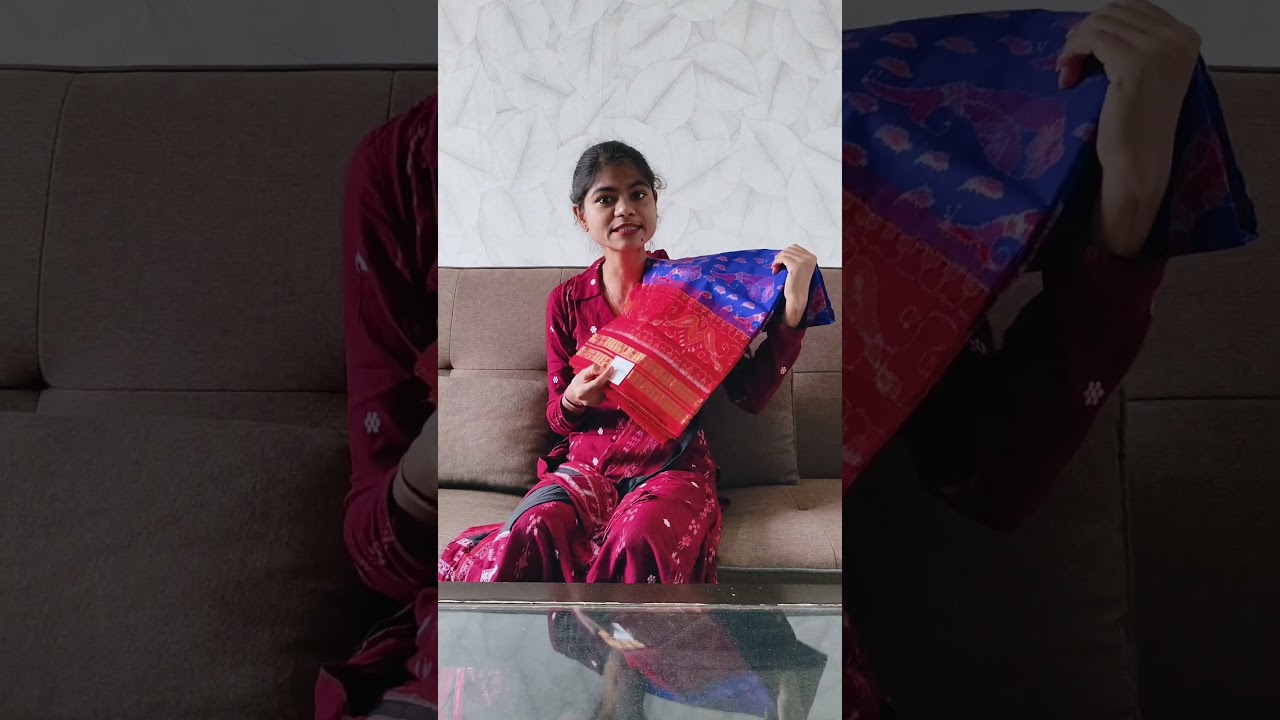
Get site-wide 10% off. Use coupon codeFEST10at checkout

Authentic Odisha Handloom Saree: A Timeless Weave of Culture, Craft & Identity

Odisha is not just a land of temples, rituals, and festivals—it is a land where stories are not only told, but woven into threads. In every village, in every loom, in every rhythmic movement of the shuttle, lives a legacy that refuses to fade.

Among its most treasured expressions is the authentic Odisha handloom saree—not merely a garment, but a living tradition, a memory, and often, a silent storyteller.

For generations, these handwoven creations have travelled from the hands of artisans to the lives of people—embraced by both women and men—becoming an integral part of weddings, festivals, and everyday elegance.

The Origin Story: Where Threads Meet Divinity

There is a beautiful kimbadanti (legend) often shared in weaving communities of Odisha.

It is believed that the art of weaving was blessed by Lord Jagannath, the presiding deity of Puri. According to folklore, the intricate patterns seen in handloom sarees were inspired by the divine attire (Vesha) of the deity himself.

Weavers say:

“What we weave is not design—it is darshan.”

In many villages of Sambalpur, Bargarh, and Sonepur, weaving is not just a profession—it is a ritual passed from father to son, mother to daughter. The loom is treated with respect, sometimes even worshipped during festivals like Nuakhai.

This deep spiritual connection makes every authentic Odisha handloom saree more than fabric—it becomes a sacred expression of devotion and identity.

The Soul Behind Every Thread

Unlike machine-made textiles, an authentic Odisha handloom saree is born from patience.

The most iconic technique used here is Bandha (Ikat)—a process so intricate that the design is created before the weaving even begins.

How it truly happens:

  • Threads are tied carefully based on the design

  • They are dyed in stages—often multiple times

  • Only then are they placed on the loom for weaving

This means the weaver must visualize the entire saree in advance, without seeing the final result until the very end.

A single saree can take:

  • 7 days to several months

  • Multiple artisans working in harmony

There is a quiet poetry in this process—where time slows down, and craftsmanship takes over speed.

Loka Katha: Stories Hidden in Motifs

If you look closely, Odisha handloom sarees are not random designs—they are visual stories inspired by loka katha (folk narratives).

Some symbolic meanings:

  • Shankha (Conch) → Auspicious beginnings, purity

  • Chakra (Wheel) → Time, movement, Lord Jagannath

  • Phula (Flowers) → Nature, fertility, celebration

  • Pasapalli (Chessboard) → Strategy, balance in life

In villages, elders often say:

“A saree speaks, if you know how to listen.”

These motifs were historically used to communicate beliefs, traditions, and even emotions, long before written storytelling became common.

Types of Authentic Odisha Handloom Sarees You Should Know

1. Sambalpuri Saree

The pride of Odisha, Sambalpuri sarees are globally admired for their Bandha (Ikat) technique. Each pattern is pre-planned, making it one of the most complex weaving styles in India.

2. Bomkai Saree

Originating from Ganjam, Bomkai sarees beautifully merge tribal artistry with refined elegance, often worn during festivals and special occasions.

3. Pasapalli Saree

With its signature chessboard design, Pasapalli reflects intellectual balance and cultural symbolism, inspired by traditional games played in ancient Odisha.

4. Kotpad Saree

Woven by tribal communities using natural dyes from tree roots, Kotpad sarees are deeply connected to nature—raw, earthy, and sustainable.

Why Authentic Odisha Handloom Sarees Are More Relevant Today

In a world dominated by fast fashion, these sarees bring back something we are slowly losing—meaning.

✔ Cultural Identity

They preserve Odisha’s heritage in a wearable form.

✔ Sustainable Living

Minimal electricity, natural dyes, and low environmental impact make them truly eco-conscious.

✔ Emotional Value

Often passed down generations, they carry memories—not just style.

✔ Exclusivity

Every saree is unique—just like the person wearing it.

How to Identify an Authentic Odisha Handloom Saree

A common question people ask:

How do I know if my saree is truly handloom?

Here’s what experienced buyers look for:

  • Slight irregularities (proof of handmade work)

  • Same design visibility on both sides

  • Soft yet firm texture

  • Natural color variations (not overly perfect)

  • Seller transparency about origin

Choosing authentic means choosing truth over imitation.

From Loom to Life: The Modern Connection

Today, while the weavers continue their timeless craft in villages, platforms like Satika are helping bring these stories to a wider audience.

Rather than treating sarees as just products, such platforms:

  • Curate authentic weaves

  • Highlight artisan stories

  • Make traditional sarees accessible in modern lifestyles

This connection ensures that the saree you wear is not just beautiful—but also meaningful and responsibly sourced.

A Living Tradition, Not Just Fashion

An authentic Odisha handloom saree is not something you simply wear.

You inherit it, celebrate in it, remember in it.

It may remind you of:

  • Your mother getting ready for a festival

  • A wedding filled with rituals and laughter

  • A quiet evening where tradition meets comfort

Kotpad Handloom Sarees: Where Earth, Tradition, and Time Weave Together
...